Food
Can Chocolate Trigger Migraine? What Women With Hormonal Headaches Should Know
You eat chocolate, then a few hours later the familiar headache arrives. Is the chocolate responsible, is your period approaching, or is caffeine quietly playing a part? For women who notice the same pattern repeatedly, it is worth paying attention rather than simply guessing.
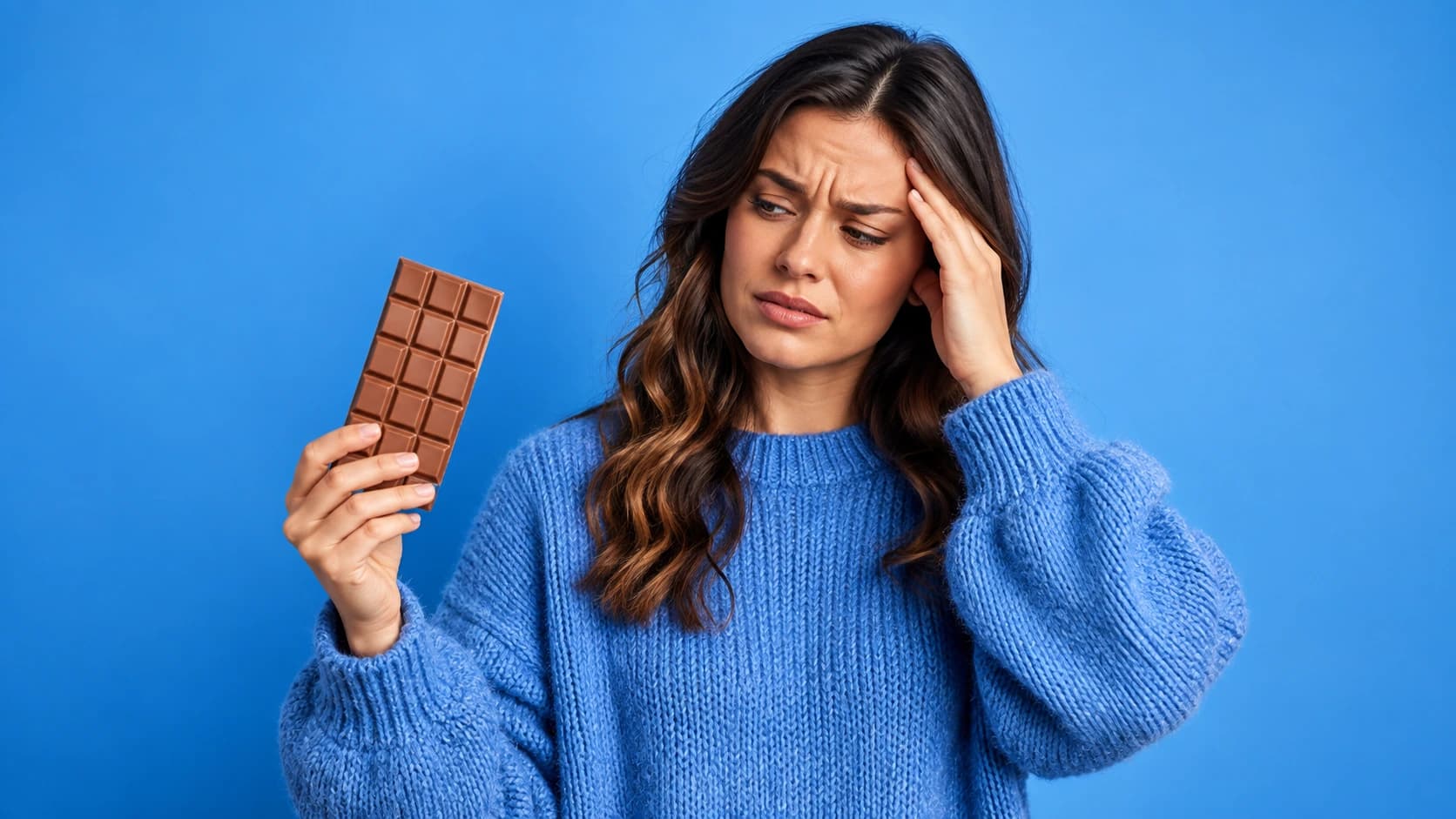
Can chocolate trigger migraine? It is the kind of question many women start asking only after the pattern becomes difficult to ignore. You eat a few pieces of chocolate in the afternoon, and later comes the familiar throbbing pain, sensitivity to light, nausea or the overwhelming need to lie somewhere quiet. When the same thing seems to happen again the following month, especially close to your period, chocolate quickly moves onto the suspect list.
The answer is more personal than a simple yes or no. Chocolate has long been reported as a migraine trigger by some people, and if you repeatedly notice the same reaction, you do not need to keep eating it simply because someone tells you the connection is uncertain. At the same time, chocolate contains several substances that may matter, including caffeine, while hormonal changes, sleep, skipped meals, stress and the timing of your menstrual cycle can all be happening in the background. The useful question is therefore not whether chocolate is a trigger for every woman, but whether it appears to be one for you.
Why Chocolate Can Feel Like Such an Obvious Trigger
Chocolate is unusual because several things are packaged into one small food. Depending on the type, it contains cocoa, sugar, fat and naturally occurring compounds such as caffeine and theobromine. Darker chocolate generally contains more cocoa, which also means more of these cocoa-derived stimulants than many lighter chocolate products.
For a woman who already knows caffeine affects her headaches, that detail matters. You may think you only had one coffee that day, forgetting that chocolate, tea, energy drinks, cola or even certain headache medicines may also contribute to your total caffeine intake. One small amount may not matter, but several sources arriving on the same day could be quite different, particularly when you are already close to your migraine threshold.
This is why a chocolate trigger migraine pattern deserves a closer look at the whole day rather than only the chocolate bar. Ask what you drank, whether you ate normally, how well you slept and where you were in your cycle. Sometimes chocolate may genuinely appear to be the final piece that tips an already sensitive system into an attack.
Caffeine Is the Part We Should Not Forget
Caffeine and migraine have a complicated relationship. Some headache medicines contain caffeine, and a small amount can sometimes help during an attack, yet too much caffeine can worsen headaches for some people. Regular caffeine users can also develop headaches when they suddenly have much less than usual, making both consumption and withdrawal relevant.
Imagine that you normally drink two cups of coffee every day. One morning you skip both, eat very little because you are busy, then have dark chocolate in the afternoon and develop a migraine that evening. Was the trigger the chocolate, the caffeine withdrawal, hunger, stress, hormone changes or a combination of several things? That is exactly why migraine patterns can be frustrating to work out.
Consistency becomes especially useful here. If you already know you are sensitive to caffeine, watch the total amount from coffee, tea, chocolate, fizzy drinks, energy products and medications rather than treating each one separately. If chocolate repeatedly causes problems, particularly darker varieties with more cocoa, avoiding it may simply be the most comfortable choice for you.
Continue your growth
Turn useful reading into career momentum.
Explore expert resources, workshops and professional support inside Satyn Circle.
Join Satyn CircleThen Your Period Arrives and the Picture Becomes Even More Complicated
Many women notice migraine attacks around menstruation, and this is not simply coincidence. Oestrogen rises and falls throughout the menstrual cycle, and the relatively sharp drop before bleeding begins appears to make some people more vulnerable to migraine. Menstrual migraine usually refers to attacks appearing from roughly two days before menstruation through the first three days of the period.
These attacks can also feel worse than migraines at other times. Some women experience stronger pain, more nausea, longer attacks or headaches that return after initially improving. Girls may first notice a changing headache pattern after puberty or around the time their menstrual cycles become established, which is another reason not to dismiss repeated headaches as simply stress or lack of sleep.
Now imagine adding chocolate to that particular week. If your migraine threshold is already lower because of hormonal changes, a food or amount of caffeine that feels completely fine at another point in the month may appear to affect you differently. That does not make the experience imaginary, and it does not mean every woman needs to ban chocolate either.
Did You Want Chocolate Because a Migraine Was Already Beginning?
Here is the curious part of this story. Before the headache itself begins, migraine can produce an earlier stage called the prodrome. During this period, which may begin hours or even a day or two before the pain, some people experience unusual tiredness, yawning, mood changes, neck stiffness, thirst or very specific food cravings.
Chocolate is one of the foods people commonly report craving. This creates an awkward chicken-and-egg question: did you eat the chocolate and then develop the migraine, or had the migraine process already started in your nervous system and caused you to want chocolate?
You do not have to solve that scientific question every time you open a chocolate wrapper. If avoiding chocolate during your vulnerable days seems to reduce attacks, that information is useful to you regardless of the precise mechanism. Personal patterns are particularly important in migraine because the combination of triggers can vary considerably between women.
What Should You Actually Watch For?
Instead of removing ten foods at once, track one suspected trigger properly. For two or three menstrual cycles, record when you eat chocolate, roughly how much you have, what kind it is and whether you also consume coffee, tea, cola or energy drinks. Add the first day of your period, sleep quality, skipped meals, stress and when the headache begins.
A simple record can reveal much more than memory alone.
| What to record | Why it may matter |
|---|---|
| Type and amount of chocolate | Cocoa and caffeine levels vary |
| Coffee, tea and other caffeine | Total daily caffeine may matter |
| Period date | Shows whether attacks cluster around menstruation |
| Meals | Skipping food can contribute to headaches |
| Sleep | Poor or irregular sleep is a common trigger |
| Stress | Several triggers may overlap |
| Time headache starts | Helps identify a repeated pattern |
If chocolate appears before one headache but not the next five, the relationship becomes less obvious. If a similar amount is repeatedly followed by migraine within a predictable period, especially when the pattern happens over several occasions, avoiding that food is a reasonable personal choice. You do not need to repeatedly test yourself with something that you strongly suspect makes you unwell.
Dark Chocolate, Milk Chocolate or All Chocolate?
This is worth noticing because saying “chocolate gives me migraines” can hide useful detail. Cocoa content varies considerably between products, and dark chocolate generally contains more caffeine and theobromine than milk chocolate. Some chocolate products also contain other ingredients such as nuts, flavourings or additional caffeine, so two products labelled chocolate may not affect you in exactly the same way.
For some women, quantity may matter as much as type. A small piece may cause no noticeable problem while a large serving after coffee does. Another woman may notice the opposite pattern and decide that any amount is simply not worth the risk.
There is no prize for proving that you can tolerate a food. If you have identified a clear chocolate trigger migraine pattern and avoiding chocolate reduces the number of miserable evenings you spend in a dark room, that is useful information about your own body.
Do Not Accidentally Create Another Trigger by Skipping Food
Once women start worrying about food triggers, there is a temptation to become extremely restrictive. That can backfire because missing meals and going long periods without eating are themselves commonly reported migraine triggers. Removing chocolate is very different from becoming frightened of food in general.
Try to keep meals reasonably regular, drink enough water and pay attention to sleep. If you know the days before your period are particularly difficult, those are not ideal days to skip breakfast, survive on coffee, work through lunch and then wonder why your head is pounding by evening. Migraine often behaves less like one switch and more like several small pressures accumulating together.
This also matters when cravings become stronger under stress. Our feature on how to stop stress-driven sugar cravings explores why reaching automatically for something sweet can become a pattern of its own.
When a “Hormonal Headache” Deserves Proper Attention
It is easy to label every monthly headache hormonal and continue suffering through it. But recurring migraine around menstruation can often be managed more effectively once a clinician understands the pattern. Speak with a healthcare professional if attacks regularly interfere with school, work or ordinary life, are becoming more frequent or severe, or are difficult to control with your usual approach.
Seek urgent medical assessment for a headache that appears suddenly and is extremely severe, or one accompanied by new weakness, trouble speaking, confusion, seizure, loss of vision or other major neurological symptoms. New or changing headaches should not automatically be blamed on chocolate or hormones simply because they happen around the same time.
Dizziness can also sometimes accompany migraine, although it has many other causes. Satynmag’s guide to feeling dizzy when standing up is useful extra reading if dizziness is something you experience separately from your usual headaches.
If Chocolate Seems to Be Your Trigger, You Are Allowed to Avoid It
The important message is not that every woman with migraine must stop eating chocolate, and it is equally unhelpful to tell a woman who repeatedly becomes ill after chocolate that she should ignore what she notices. Migraine is highly individual, and your own repeated pattern deserves attention. If chocolate, particularly alongside caffeine or during the days around your period, repeatedly seems to precede an attack, reducing or avoiding it is a practical decision you can discuss with your healthcare professional.
At the same time, look at the wider picture so you are not blaming chocolate for a migraine that is being pushed along by several factors at once. Your period, sleep, stress, missed meals, dehydration and total caffeine intake can all change from one day to another. The more clearly you understand that combination, the easier it becomes to make choices that actually reduce your headache days rather than following somebody else’s list of forbidden foods.
For readers who want to look more closely at the science behind the chocolate question, a review published in Nutrients examined 25 studies on chocolate and migraine and discussed both reported triggers and the possibility that chocolate cravings may sometimes begin during the early phase of an attack. The research does not give every woman the same answer, which is exactly why your own pattern remains so important. If chocolate consistently seems to make your hormonal migraine days worse, avoiding it is a sensible way to protect a day you already know may be vulnerable.
Share
Written by
Satyn Editorial