Mom & Baby
Baby Hiccups: Why They Happen, What Helps and When to Worry
That tiny “hic, hic, hic” can sound surprisingly dramatic coming from a newborn. Baby hiccups are extremely common and usually bother parents far more than babies, but knowing why they happen and what actually helps can make those early months much less worrying.
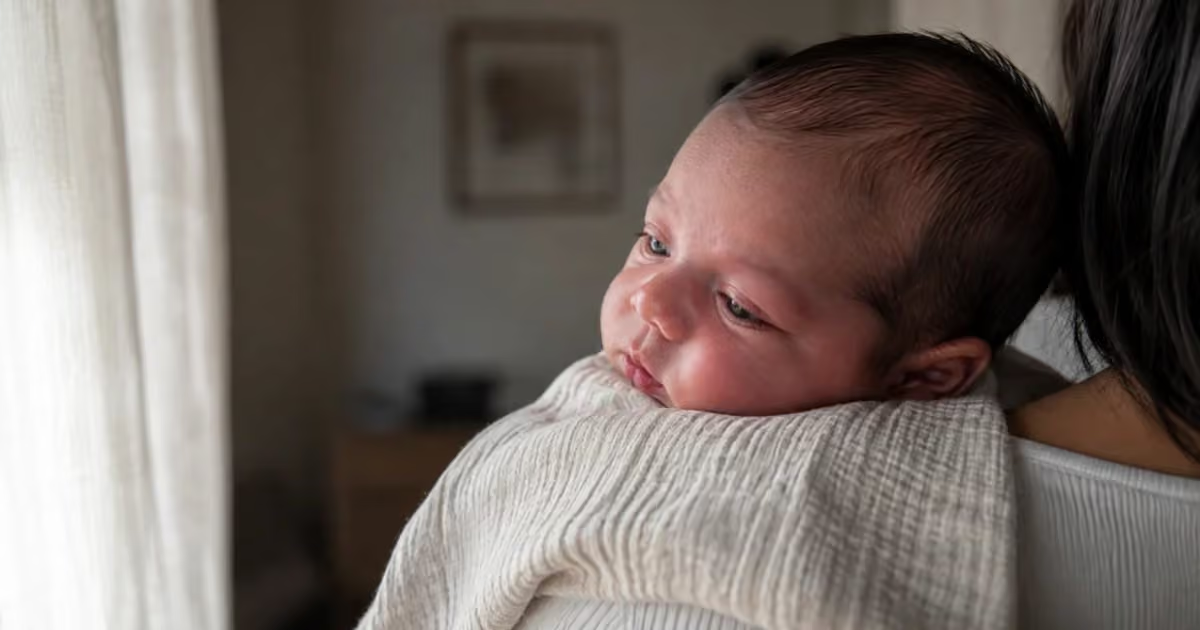
You have just finished feeding your baby, finally settled them comfortably, and then it begins: hic, hic, hic. The sound can seem surprisingly strong coming from such a tiny body, and for a new parent it is very easy to wonder whether something is wrong. Baby Hiccups are incredibly common, however, and most of the time the baby is far less concerned about them than the parent watching. Some babies will happily continue looking around, feeding or even sleeping while the hiccups carry on.
In fact, hiccups can begin before birth, which is why some mothers remember feeling small, regular movements during pregnancy that seemed to come in a rhythm. After birth, they remain especially common during the early months when feeding, digestion and breathing are still developing. Most episodes disappear on their own without treatment. The useful part for parents is learning what may be encouraging them and when hiccups are accompanied by something that deserves more attention.
What Is Actually Happening During a Hiccup?
A hiccup begins when the diaphragm, the large muscle underneath the lungs that helps with breathing, contracts suddenly. The vocal cords then close quickly, producing that familiar little “hic” sound. In babies, this reflex can happen frequently and does not usually mean there is a breathing problem. A medically reviewed guide to newborn hiccups also notes that many babies seem completely unbothered by them.
Feeding can sometimes play a part because babies may swallow air while drinking, particularly when they are very hungry, crying or gulping quickly. A very full stomach may also put pressure around the diaphragm and be followed by hiccups. This is why parents often notice them shortly after breastfeeding or bottle-feeding. It does not automatically mean that the milk, formula or feeding itself is causing a health problem.
Why Does My Baby Get Hiccups After Almost Every Feed?
Some babies simply hiccup more than others, and feeding is one of the times parents are most likely to notice it. A baby who drinks quickly or swallows more air may be more likely to hiccup, while another baby using exactly the same feeding method may hardly hiccup at all. Babies can also become more unsettled when they are extremely hungry, which can make them gulp and swallow additional air once feeding starts. Feeding before your baby becomes very upset can sometimes make the whole experience calmer.
Burping can help when swallowed air appears to be contributing to the problem. If hiccups begin during a feed, pause for a moment, change your baby’s position and gently try to burp them before continuing. Breastfed babies can be burped when changing breasts, while bottle-fed babies may benefit from pauses during the feed rather than waiting until the bottle is finished. There is no need to force a burp if your baby seems comfortable and none comes.
Continue your growth
Turn useful reading into career momentum.
Explore expert resources, workshops and professional support inside Satyn Circle.
Join Satyn CircleWhat Can You Safely Do When Baby Hiccups Begin?
The first option is often the easiest: wait. Most ordinary Baby Hiccups settle by themselves within a short time, particularly when the baby is calm and comfortable. Parents naturally want to “fix” hiccups because they find them uncomfortable themselves, but babies do not always experience them in the same way. If your baby is breathing normally and seems content, there may be nothing you need to do.
If the hiccups are happening around feeding, try a gentle burp and keep your baby comfortably upright while they are awake for a little while after the feed. A pacifier may sometimes help because the sucking motion can relax the diaphragm, although not every baby uses one and there is no need to introduce one purely for hiccups. Feeding slowly and avoiding very active bouncing immediately after a large feed may also make some babies more comfortable. These are gentle measures rather than guaranteed cures, because newborn hiccups will often stop when they are ready.
| What you can try | Why it may help |
|---|---|
| Pause during feeding | Gives the baby time to settle |
| Gently burp the baby | May release swallowed air |
| Feed before baby becomes extremely hungry | May reduce frantic gulping |
| Keep baby upright while awake after feeding | Can be more comfortable after a feed |
| Let the hiccups pass naturally | Most episodes stop without treatment |
Do Not Try Adult Hiccup Tricks on a Baby
Adults have all sorts of tricks for hiccups, from holding their breath to being frightened unexpectedly. Those methods are not suitable for babies and should not be tested simply because someone in the family says they worked years ago. Do not deliberately scare a baby, pull their tongue, interfere with their breathing or give unusual home remedies without medical advice. A baby’s body is not a smaller version of an adult’s, and harmless-looking internet tricks can be inappropriate for newborns.
Gripe water is also sometimes suggested for hiccups, but there is not good evidence that it reliably stops them. Before giving a newborn any herbal mixture, supplement or additional drink, speak with your baby’s healthcare professional. Young babies generally receive the fluids they need from breast milk or appropriately prepared formula, so ordinary water should not be introduced as a hiccup remedy without medical guidance. When hiccups themselves are harmless, adding unnecessary remedies can create more concern than the hiccups ever did.
Could Hiccups Mean Reflux?
Parents often hear reflux mentioned when a baby hiccups frequently, but hiccups alone are not enough to tell you that a baby has reflux disease. Many healthy babies spit up occasionally because their digestive system is still developing, and they may also hiccup regularly. It becomes more useful to discuss reflux with a healthcare professional when hiccups are appearing together with other problems. These can include frequent troublesome spit-up or vomiting, coughing around feeds, obvious discomfort, crying or arching of the back during or after feeding.
If your baby is otherwise comfortable, feeding well and growing normally, occasional hiccups usually do not need to become another thing to worry about. If feeding seems painful, your baby regularly refuses feeds, vomits repeatedly or you are concerned about weight gain, let your doctor assess the whole picture rather than trying to diagnose the problem from hiccups alone. Babies can have similar symptoms for different reasons. A proper assessment is much more useful than trying several feeding changes at home based on guesswork.
When Should Baby Hiccups Make You Call the Doctor?
Hiccups themselves are rarely the worrying part; it is what happens alongside them that matters. Contact a healthcare professional if the episodes are unusually persistent, frequently interfere with feeding or sleep, or your baby seems distressed whenever they occur. You should also get medical advice if frequent hiccups appear together with repeated vomiting, poor feeding or other changes that concern you. Parents know their baby’s usual behaviour, so a clear change is worth discussing even when you cannot immediately explain it.
Seek urgent medical help if a baby is struggling to breathe, becomes unusually floppy or difficult to wake, or develops blue or grey colouring around the lips or tongue. A baby who cannot feed because of breathing difficulty also needs prompt attention. For babies under three months, a temperature of 38°C or higher requires urgent medical advice rather than being put down to hiccups, teething or another simple explanation. In these situations, the other symptoms are the concern, not the familiar “hic” sound itself.
Most of the Time, Hiccups Are Just Part of Being a Baby
The early weeks with a newborn have a way of making every sound feel important. A sneeze makes you look over, a little cough makes you listen more carefully, and five minutes of hiccups can suddenly become tonight’s internet search. Learning which little behaviours are normal is part of getting to know your baby, and hiccups usually belong in that ordinary group.
So when those tiny hiccups start again after tomorrow’s feed, check that your baby is comfortable, give them a gentle burp if needed and allow a little time for the episode to pass. You do not need to stop every hiccup, and you certainly do not need to try every home remedy people recommend. What matters is noticing how your baby is feeding, breathing and behaving overall, while knowing that most Baby Hiccups are simply another surprisingly noisy part of early life.
For more simple, practical guidance on pregnancy, newborn care, feeding and everyday parenting questions, explore Satynmag’s Mom & Baby section.
Share
Written by
Satyn Editorial